Things to Do
Touring Stetson Kennedy’s Beluthahatchee, one of St. Johns County’s most overlooked pieces of Old Florida
Suburban St. Johns County has a way of fooling you into thinking nothing historic could possibly be mixed in subdivisions and strip malls.
By Fabrizio Gowdy
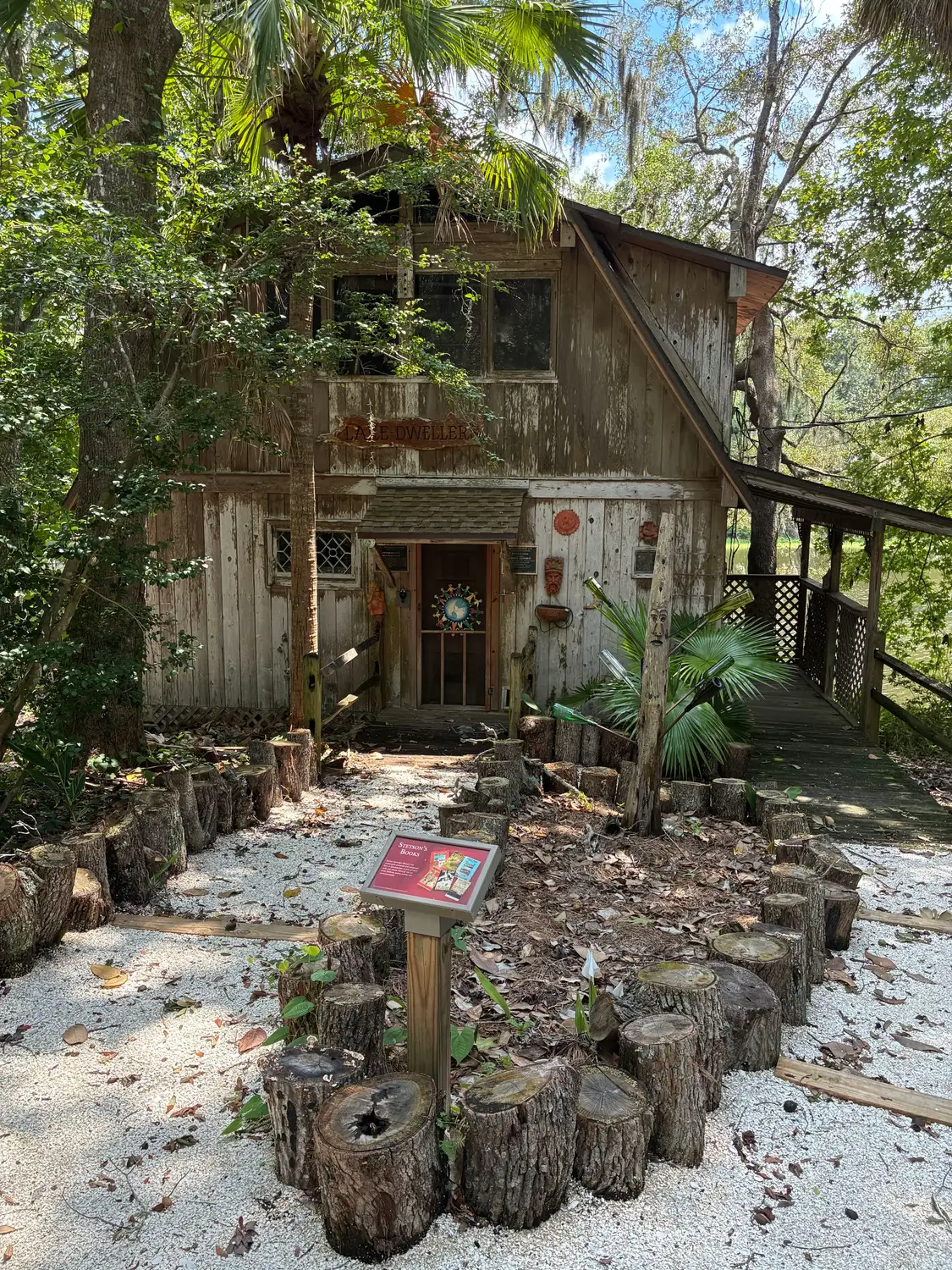
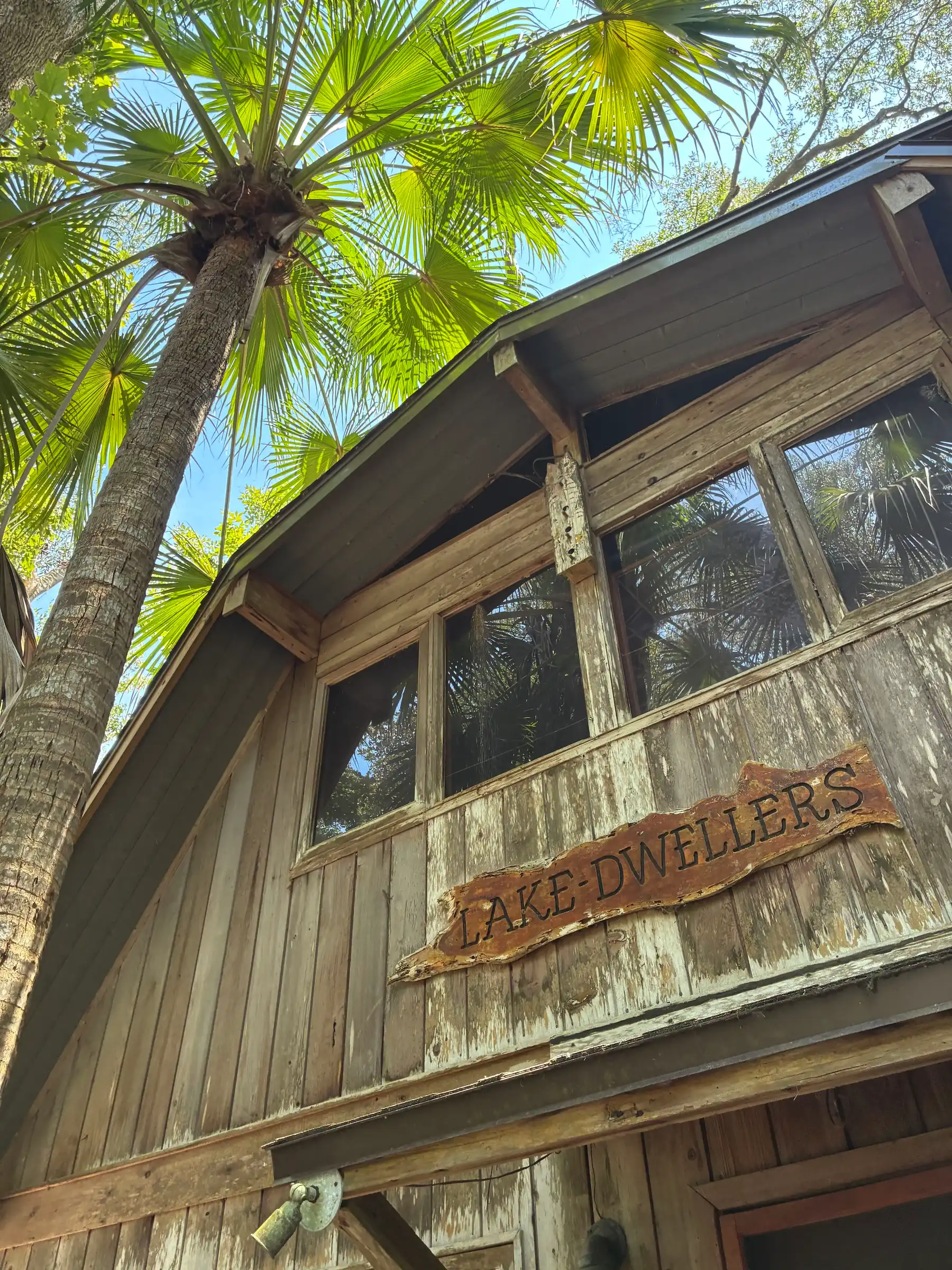
All the recent talk of runaway suburban sprawl and concern about overdevelopment may have some St. Johns County residents longing for a bit of that Old Florida charm that seems increasingly fleeting. Suburban St. Johns County has a way of fooling you into thinking nothing historic could possibly be mixed in subdivisions and strip malls. Yet Old Florida is exactly the vibe you’ll find in Fruit Cove at one of the county’s most overlooked historic sites — Beluthahatchee, the longtime home of renowned local author and civil rights activist Stetson Kennedy. Few people who speed past on State Road 13 are aware that just beyond the busy thoroughfare lies a wood-frame cedar cottage on a four-acre lakefront retreat, or that the home is open to public tours. A humble, boomerang-shaped sign is all that marks the unpaved driveway.
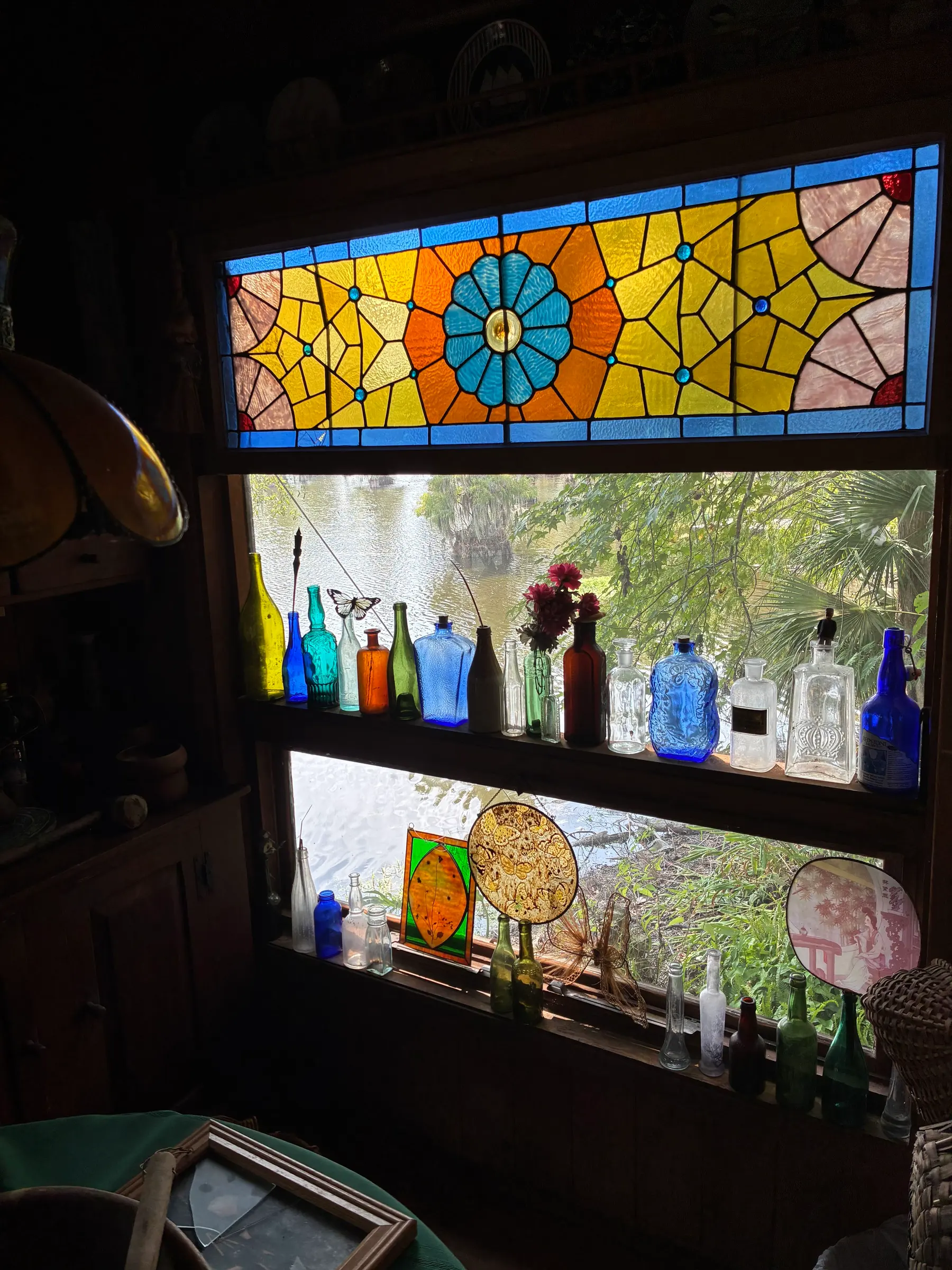
As rustic as it looks, Kennedy ordered the cottage from a kit sold by Lindal Cedar Homes in Canada. He filled the home with art and pieces collected from his travels, and “poor man’s stained glass” — colored bottles placed on window ledges.
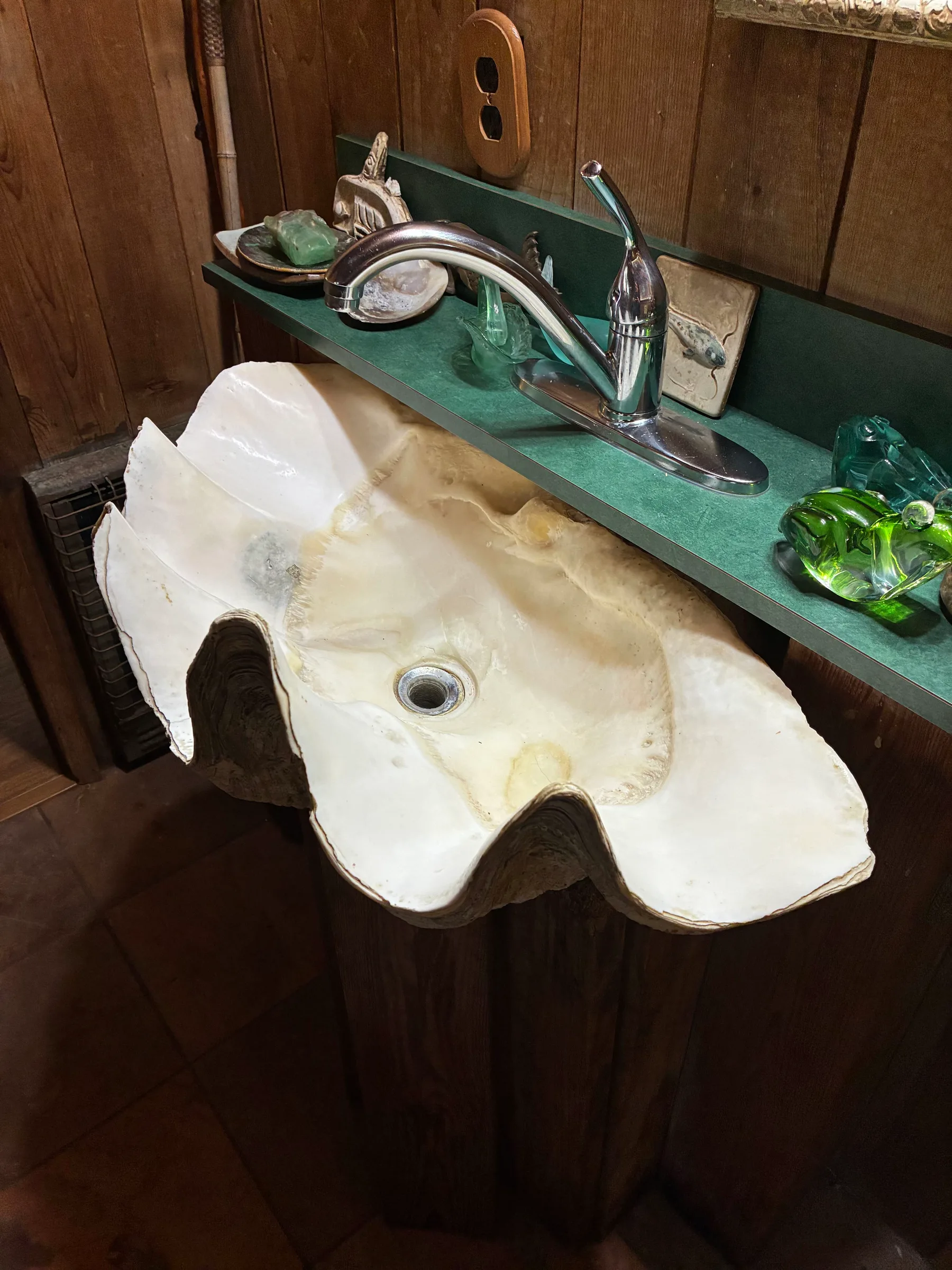
The bathroom might be the most eclectic room, featuring a wood-rimmed tub and a sink basin made from a massive clam shell that had served as a punch bowl at his wedding to Karen Roumillat’s mother. Many drill bits were broken drilling the drain hole.
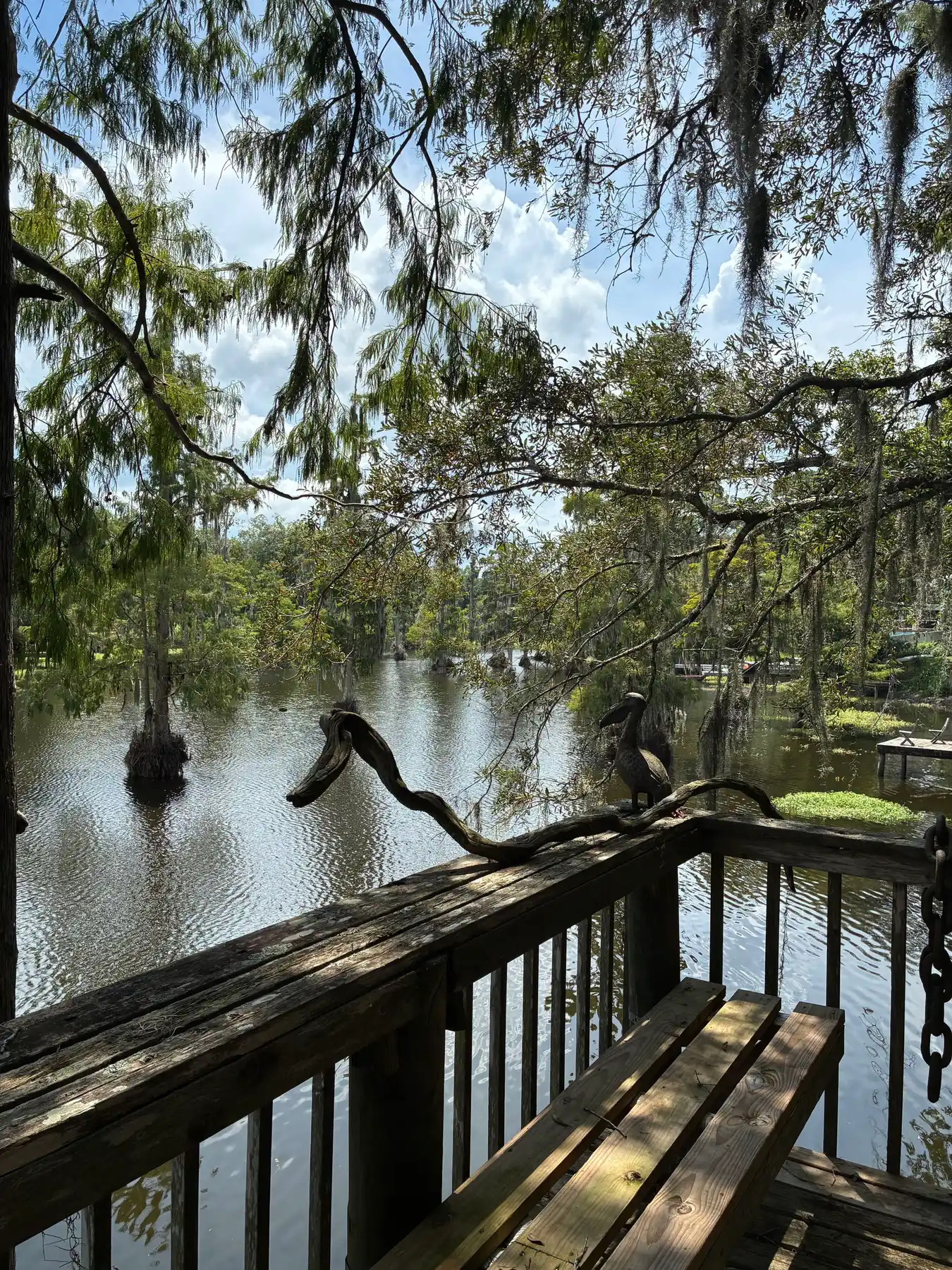
The back deck hangs over Lake Beluthahatchee, but Kennedy’s favorite place was his office upstairs, where he could write undisturbed. Before he died in 2011 at 94, Kennedy requested the office be left untouched, and so it has remained for 15 years — as if he just stepped out for a stroll along the lake.
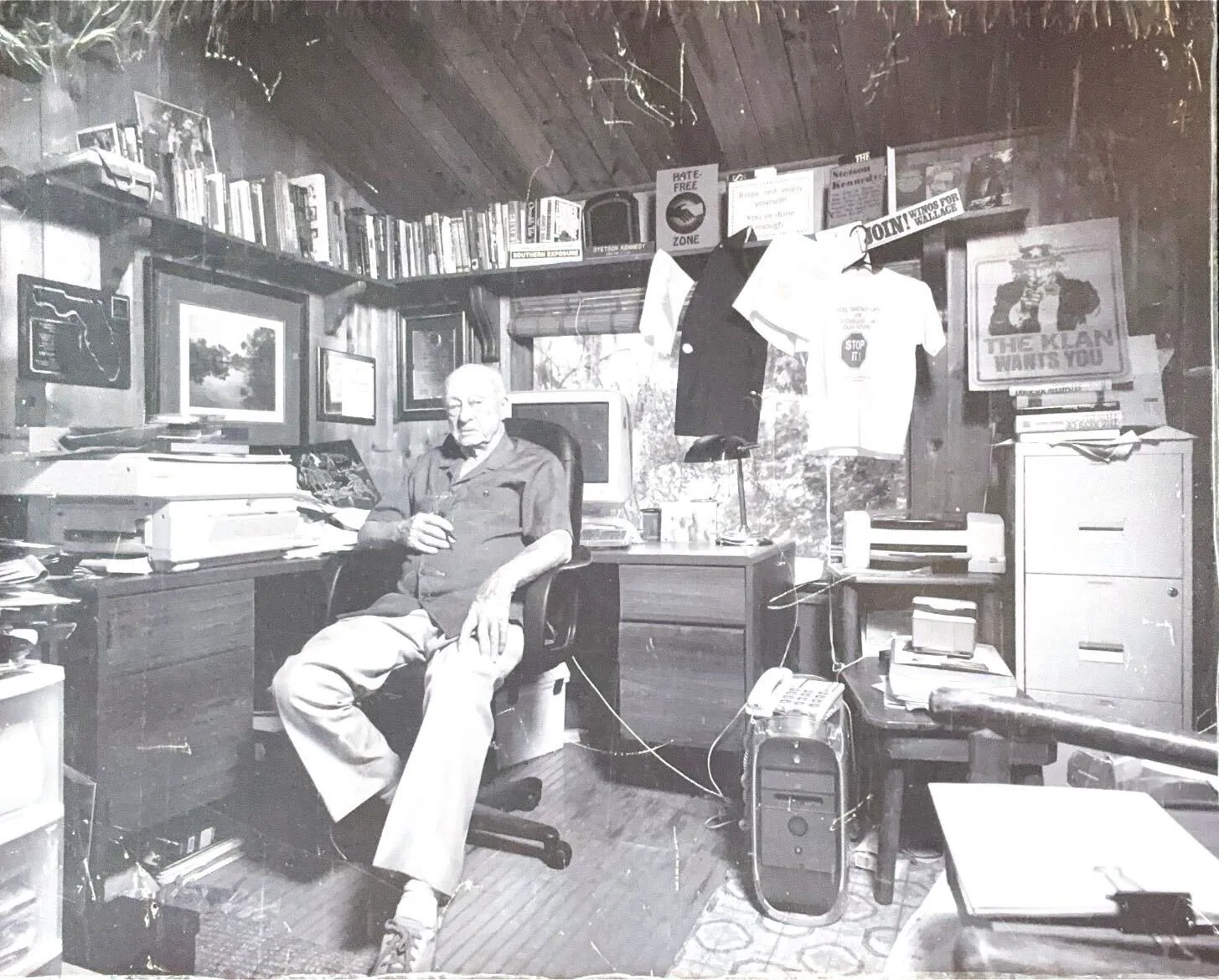
For six decades, Beluthahatchee was Kennedy’s escape from the world. As a younger man, it was quite literally his hidden refuge from the KKK, which put a bounty on his head after he famously infiltrated the group to expose its secrets.
The name “Beluthahatchee” was popularized by Kennedy’s friend, author and folklorist Zora Neale Hurston. It means a mythical Florida Shangri-La “where all unpleasantness is forgiven and forgotten.”
Kennedy inherited the property from his father, who purchased it as a weekend getaway and dammed Mill Creek to create the 18-acre Lake Beluthahatchee. The elder Kennedy owned a furniture store where customers paid a dollar down and a dollar a week, and Kennedy’s first job was collecting the installments. At the height of the Great Depression, it proved formative.
“He saw what taking that dollar each week did to some families,” said Kennedy’s stepdaughter, Karen Roumillat.
At 21, Kennedy joined the Works Progress Administration’s Federal Writers project, traveling the state to collect folklore, record oral histories from surviving slaves and preserve other pieces of Old Florida history before they faded away.
Kennedy later infiltrated the Klan in Atlanta using the alias “John Perkins.” He exposed the group’s secret codes, rituals and violent activities to the press, puncturing its mystique and helping lead Georgia to revoke the organization’s charter in 1947.
One person who followed Kennedy’s exploits with fascination was folk singer-songwriter Woody Guthrie, best known for “This Land Is Your Land.” Determined to meet Kennedy, Guthrie took a bus to Downtown Jacksonville, found his number in the phone book and called to tell him to come pick him up. When Kennedy arrived, he found Guthrie asleep on the sidewalk, lying on his guitar case.
The two became close friends, and Guthrie ended up living at Beluthahatchee on and off for months, completing his autobiography and composing over 80 songs there. One, “Beluthahatchee Bill,” was only put to music recently when Guthrie’s granddaughter visited a few years ago and performed it for the first time.
The cottage visitors see today had not yet been built, so the accommodations were considerably more rustic. Kennedy and Guthrie lived on a bus they had converted into a motorhome — no running water, electricity or bathrooms.
“It was definitely Old Florida living,” said Roumillat.
The Klan was still furious over Kennedy’s exposés, and put a $1,000 bounty on his head. Beluthahatchee’s wooded location provided a secluded refuge, but just to be safe, Kennedy and Guthrie held regular target practice and drilled for an attack.
One night, Kennedy pranked his friend by sounding the alert they had designated for an ambush, but the joke ended poorly when Guthrie scrambled out of bed and stepped into hot coals where their bonfire had been.
In his later years, Kennedy worked to turn the property into a county park and nature preserve, sawing off the tops of dead cypress trees in the lake to create an osprey rookery.
Today, the Stetson Kennedy Foundation continues to welcome visitors. Tours can be arranged by calling 904-549-9444 and are often accompanied by a friendly cat named Elaine who has appointed herself tour guide.
Every second Sunday of the month, the foundation also welcomes the public for live musical performances in a listening room next door, with cottage tours after the show. More information about Sundays at Stetsons can be found on Facebook.
According to Roumillat, Kennedy was proudest not of his work unmasking the Klan or his nationally-recognized literary accolades, but of what he preserved at Beluthahatchee. There was nowhere he’d rather be.