Non-Profit
St. Augustine Nonprofit Pink Up the Pace Helps Cover Cost of Mammograms and Diagnostic Care
Pink Up the Pace may be best known for its annual October 5K, but its impact continues all year, helping local women access mammograms, ultrasounds and other critical breast-health screenings when cost stands in the way.
By Heather Vreeland
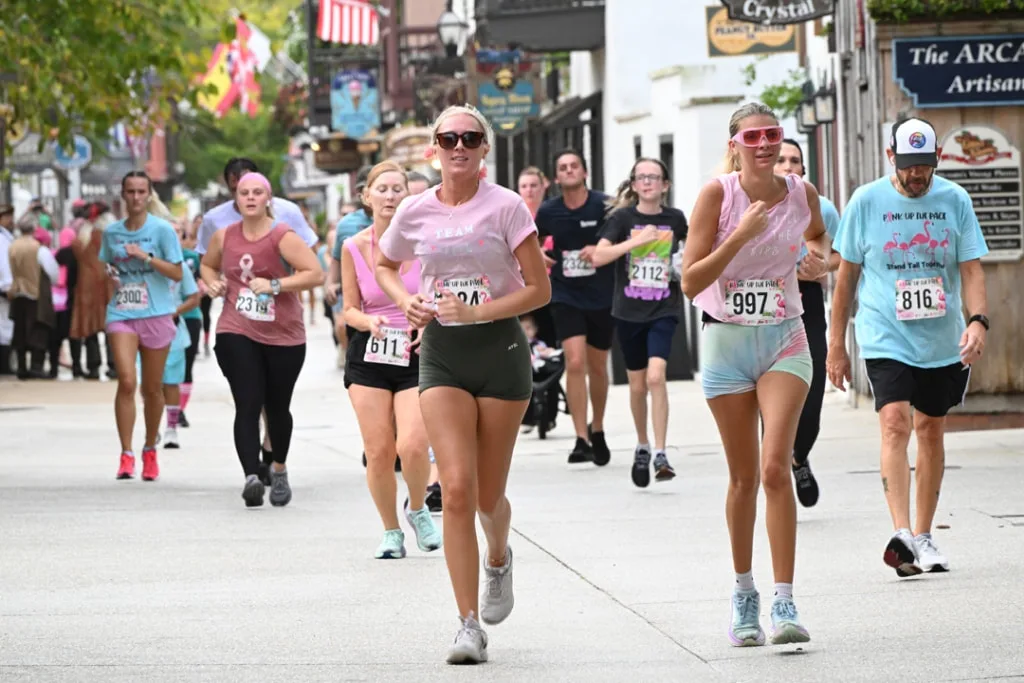
Pink Up the Pace may be one of St. Augustine’s most recognizable October traditions, but the nonprofit’s work continues long after the annual 5K ends. Now entering its 18th year, Pink Up the Pace uses money raised through the race and other community partnerships to help local uninsured and underinsured residents afford breast-health screenings and diagnostic services, including mammograms, ultrasounds, MRIs and biopsies. Founder Cindy Chaconas said the organization provides roughly $50,000 to $60,000 in services each year.
For Chaconas, the mission is straightforward: remove cost as a reason someone delays getting checked. She said many of the people who seek help are working in service-related jobs and may not have insurance. Rather than putting applicants through an extensive financial review, Pink Up the Pace keeps the process relatively simple. “If they need help and they’re reaching out, it’s because they do,” Chaconas said. “We raised money. Why not help them?”
Patients are often connected to Pink Up the Pace through physicians or local imaging centers after learning what a screening or diagnostic procedure will cost. Others contact the organization directly after receiving a prescription for imaging and realizing they may not be able to afford it.
Chaconas handles many of those calls herself and said she typically responds within 48 hours. She asks about a patient’s previous screenings, where prior records are located and what type of assistance is needed, then helps guide them toward the next step.
That personal approach is intentional. Chaconas said her own experiences as a patient, along with helping her mother navigate resources, showed her how frustrating it can be to call large organizations and struggle to reach someone directly. “I always feel like if someone needs help, that’s when they reach out,” she said.
Pink Up the Pace also has a separate source of assistance known informally as the Marty Scholarship, created after a breast cancer survivor named Marty left money to the organization. Chaconas said those funds can sometimes be used to provide direct financial help to someone facing expenses related to their care.
While breast cancer awareness peaks each October, Chaconas said one of the nonprofit’s biggest messages applies throughout the year: pay attention to changes in your body and do not let fear keep you from getting answers.
She said many women tend to put themselves last when family expenses pile up, whether that means new shoes for the kids, home repairs or other everyday costs. Others may hesitate because they are afraid of what a lump or abnormality could mean. But Chaconas said not every concern turns out to be cancer, and getting checked is the only way to know what comes next.
Her advice is to take the process one step at a time. “Know your body,” she said. “When you don’t have the answers, try to find them until you get them.”
The annual Pink Up the Pace 5K remains the organization’s largest and most visible fundraiser, drawing runners, volunteers and businesses into downtown St. Augustine each fall. But Chaconas said the race is ultimately the engine behind the less visible work that follows: helping local residents get the screenings and diagnostic care they might otherwise postpone. And for Pink Up the Pace, that year-round access to care is the real finish line.