Government
St. Augustine City Commission candidates weigh in after contentious 3-2 vote to keep horse-drawn carriages
What is the industry's future in St. Augustine? We asked Commissioner-elect Ashleigh Barnes and two candidates vying for Seat 5 how they plan to deal with the issue.
By Fabrizio Gowdy
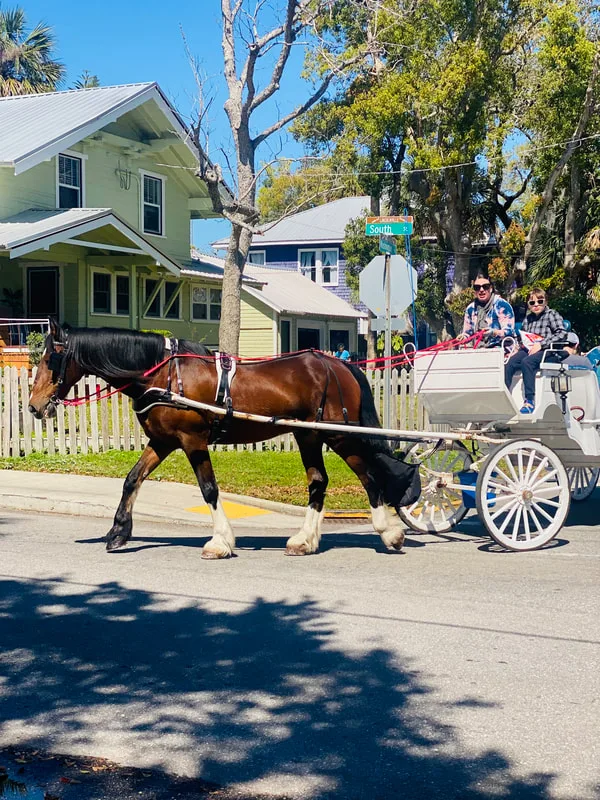
The St. Augustine City Commission voted 3-2 Monday to award horse-drawn carriage franchises to seven applicants, preserving the industry for at least three more years while exposing a sharp divide over its future.
Commissioners approved one medallion for each of the seven applicants who cleared the city’s process, with the remaining three available through a lottery. The franchises, initially proposed for five years, will instead run for three years. The commission also agreed to take a closer look at what it costs the city to maintain the local carriage industry.
Commissioners Jim Springfield and Barbara Blonder voted no. Springfield urged the city to begin phasing out horse-drawn carriages, while Blonder questioned whether the city is subsidizing an industry that does not cover the cost of regulating it.
Blonder called the arrangement a “regulatory subsidy,” saying the city’s oversight, inspections, administration and maintenance costs vastly exceed the $1,000 annual medallion fee. She argued that was unfair to other types of businesses.
Springfield proposed phasing out horse-drawn carriages through shorter franchise terms, arguing the next commissions should have opportunities to decide the industry’s future. That marked a shift from July, when Springfield defended the practice and pushed back on animal welfare advocates.
Commissioner Cynthia Garris, who is set to become the city’s first Black mayor in December, voted with Mayor Nancy Sikes-Kline and Commissioner John Prater to approve the franchises. Garris said she was offended by one speaker who likened carriage horses to enslaved people, calling the comparison “a slap in the face.”
The 3-2 vote followed hours of public comment featuring opponents again urging the city to end what they called an outdated and cruel practice. A relatively small but dedicated group of animal welfare advocates has been loudly calling for the city to shut down the industry locally, protesting on city streets and attending every city commission meeting to keep up their fight.
One speaker told commissioners that “the devil’s got a good grip on this commission” for continuing to allow horse carriages, and claimed anyone who voted to continue the practice wouldn't reach heaven.
Several carriage operators defended their livelihood and the quality of care given to their horses. Aaron Jockers, owner of St. Augustine Transfer Company and a carriage driver in the city for the past 17 years, said the industry needed to do more to ensure horses are being taken care of, and encouraged drivers to hold each other accountable on animal welfare and safety issues.
“If you care about these animals, we have to raise our standards,” said Jockers, whose company dates back to 1877.
Earlier in the meeting, commissioners heard appeals from three carriage-franchise applicants whose applications were denied after background checks by city staff revealed old, undisclosed convictions. They allowed John Redmond and Tiffany Richardson to proceed, but denied an appeal by Coastal Carriages operator Fred Pezza, who had failed to report two felony convictions from the late 1990s.

Pezza pleaded with the commission, saying he had already paid insurance, bought equipment and a horse, and booked more than 130 prepaid Nights of Lights rides. However, commissioners unanimously denied his appeal, meaning he will not be able to operate his business in the city.
City Commission Candidates Weigh In
The upcoming commission election could alter the balance. Sikes-Kline and Springfield are leaving the commission soon, which leaves a 2-1 majority that voted in favor of keeping horse-drawn carriages.
Seat 5 candidate Julie Settle said she would have supported keeping horse carriages. She called them a longstanding fixture of St. Augustine and said they are “a beautiful thing for the city” as long as horses are cared for. She supports keeping carriages away from heavier traffic where appropriate.
Her opponent, Matt Brown, said carriage tours appear to be “on their way out nationwide” because of safety and animal-welfare concerns. Brown said he favors a gradual phaseout, but said it wouldn't be fair unless operators are given plenty of notice and time to adapt. He suggested vintage motorized coaches as an alternative that preserves the old-fashioned charm, noting they that have become popular in Charleston.
Ashleigh Barnes, who will take her seat on the commission in November after winning the Seat 4 race in August, said the city should not eliminate carriages without evidence that they create substantial animal-welfare, safety or mobility problems. She called for independent veterinary assessments, consistent enforcement and a review of accident reports, traffic delays and emergency-access impacts.
Depending on the outcome of the Seat 5 race, it seems likely the commission will still have three or four commissioners in favor of preserving the local carriage industry in some form.
Other cities have been moving away from horse-drawn carriage tours. Philadelphia banned the practice in June, while San Antonio is working toward a Jan. 1, 2030 phaseout. New York City is also poised to ban carriage rides after a teen visiting from India was killed in an accident.