Non-Profit
Project Savior Outdoors Tackles Veteran Suicide Through Faith and Brotherhood
How a Florida alligator wrangler turned personal tragedy into a Christ-centered mission to end veteran suicide—and the brotherhood bringing hope to men across the country.
By Heather Vreeland
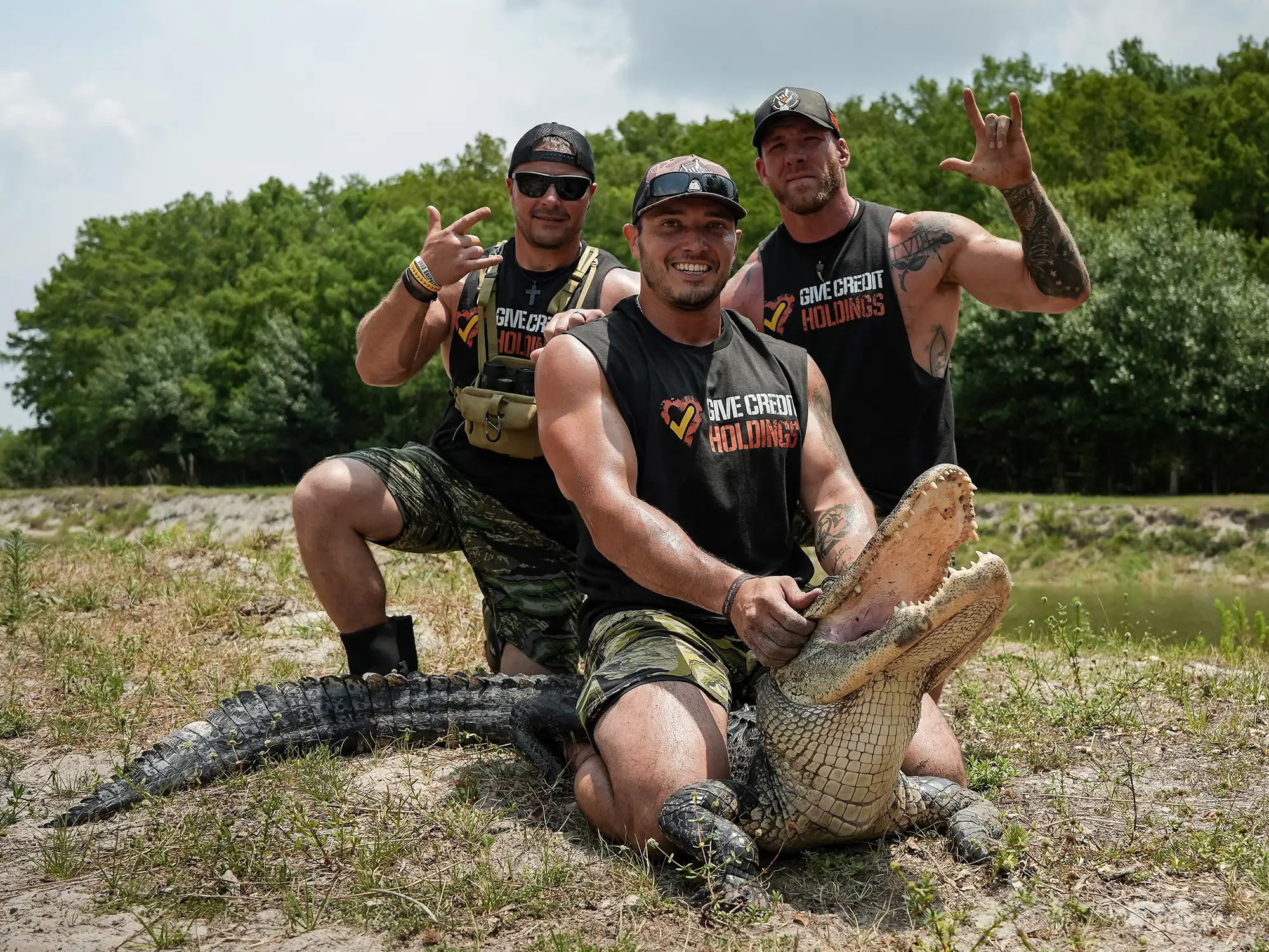
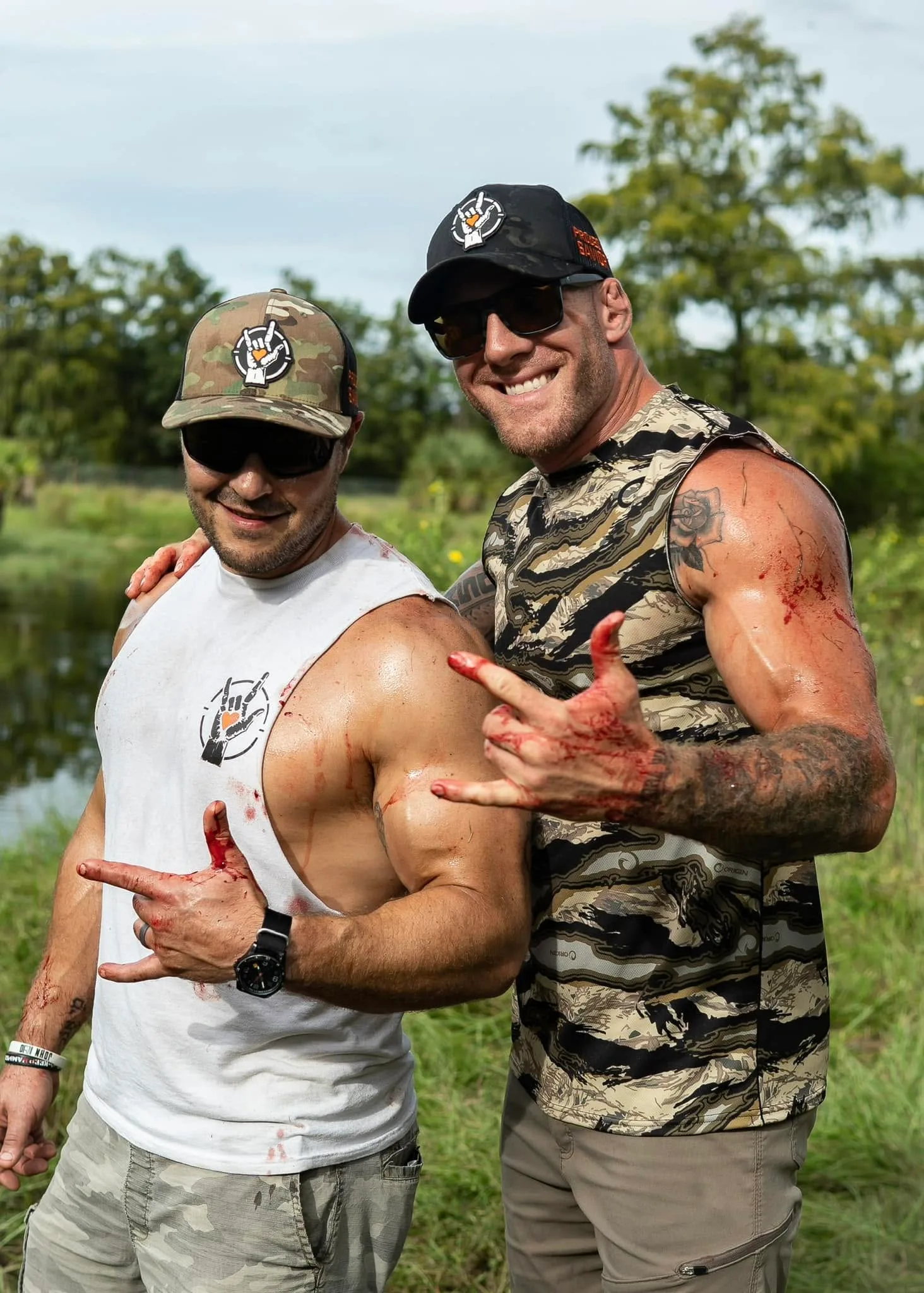
Mike Dragich is not exactly the kind of man who blends into a crowd. A former United States Marine, mixed martial arts fighter and licensed Florida alligator trapper, he has become something of an internet sensation for doing what most people would never dream of attempting: wrestling enormous alligators, sometimes in the most unlikely places. In 2023, he made headlines after removing a 10-foot alligator from the grounds of a Jacksonville elementary school. More recently, footage of him wrestling a gator near the Arlington Expressway once again made the rounds online. His larger-than-life personality, unmistakable confidence and willingness to go toe-to-toe with Florida's most intimidating reptiles have earned him the nickname "Blue Collar Brawler" and a devoted social media following. But behind the viral videos, the tattoos and the adrenaline-fueled adventures is a mission far more personal than anything Dragich has ever encountered in the wild. He's fighting to keep veterans alive.
Through Project Savior Outdoors, a faith-based nonprofit founded here in Northeast Florida, Dragich and a growing brotherhood of veterans, first responders and volunteers are confronting one of the most heartbreaking consequences of military service: the loss of men and women who survive their time in uniform but struggle to find their footing afterward.
Their approach is unconventional. There are alligator hunts, fishing expeditions, early-morning workouts, jiu-jitsu sessions and evenings spent around a bonfire. But the adventures are only the beginning. Beneath the excitement is a commitment to building lasting relationships, restoring a sense of purpose and introducing men to what the organization's leaders believe is the ultimate source of hope and transformation: a personal relationship with Jesus Christ. And according to Eli Tavarez, Project Savior Outdoors' ministry director and discipleship coordinator, that distinction is everything. "The alligator hunt doesn't save the guy," Tavarez explains. "The bonfire doesn't even save the guy." The adventures create opportunities for trust. The brotherhood provides a place to belong. But the gospel of Jesus Christ is the message at the heart of the ministry.
For Dragich and Tavarez, Project Savior Outdoors is not simply an outdoor recreation program with a Christian component. It is a Christian ministry that uses outdoor adventures to reach veterans and first responders who may be struggling with isolation, trauma, depression or questions of identity and purpose. And what began as a desperate response to personal tragedy is now growing into a movement they hope will reach communities throughout the country.

The Phone Call That Changed Everything
The beginnings of Project Savior Outdoors can be traced to a series of losses that Dragich could no longer bear to witness. After returning from Afghanistan, Dragich watched as 15 Marines with whom he had served died by suicide over the course of several years. Each loss was devastating. Each unexpected phone call carried the possibility of more terrible news. Then, one night around 2:30 in the morning, Dragich received a FaceTime call from another Marine. Initially, he let it ring. But something compelled him to answer when the phone rang again. On the other end was a fellow Marine in immediate crisis, threatening to take his own life. There was no carefully prepared speech, no simple solution and no guarantee that the conversation would end well. Dragich stayed on the phone for approximately two hours, praying with his fellow Marine while his wife helped coordinate a response with local authorities. Police intervened, and the man survived. Today, that Marine has a thriving family, children and a renewed relationship with his faith.
For Dragich, the experience became a turning point. After years of watching men he loved lose their lives, he believed God was calling him to do something about it. What followed was the beginning of Project Savior Outdoors, established by Dragich alongside fellow founders Rick Hall and Justin Smith. There was no sprawling facility, no extensive staff and no elaborate organizational infrastructure. In the beginning, it was simply three men, a laptop in a garage and one veteran joining them through Zoom. Nearly four years later, that small gathering has grown into a nonprofit that Tavarez says has reached approximately 700 people locally and nationally, with plans to expand its model into communities across the country.
The mission has remained unchanged: to fight veteran and first responder suicide by helping people forge community, ignite purpose and defy darkness through outdoor experiences and a relationship with Jesus Christ. It is an ambitious mission, and one Tavarez knows can invite skepticism. When he tells people the organization intends to end veteran and first responder suicide, he often hears the same response: "Good luck." But for the men leading Project Savior Outdoors, the enormity of the challenge is not a reason to retreat. It's a reason to keep going.
A Battle Far Beyond the Battlefield
The need is undeniable. According to the U.S. Department of Veterans Affairs, 6,398 veterans died by suicide in 2023, an average of approximately 17.5 every day. The department also reported that 61 percent of those veterans had not received VA health care during the final year of their lives. Behind those numbers are families, friendships and communities forever changed.
Tavarez believes one of the most difficult challenges veterans face is not necessarily what happened during their service, but what happens when that service ends. Military life provides structure, responsibility, camaraderie and a powerful sense of identity. A person's work can become inseparable from their understanding of who they are. Whether serving in combat, law enforcement or emergency response, individuals become accustomed to operating in environments where their decisions matter, their performance carries consequences and their teammates depend on them. Then, sometimes quite suddenly, that chapter closes.
For some, the transition comes after a distinguished career. For others, it follows an injury, medical retirement or unexpected separation. Whatever the circumstances, the question can become the same: Who am I now? Tavarez describes the experience as an unsettling quiet that can consume a person's thoughts. The intensity and purpose that once defined daily life are replaced with ordinary routines, leaving some veterans questioning their value and place in the world. "Your value is not your job," he says.
It's a simple statement, but one Tavarez believes many veterans have difficulty accepting. He acknowledges that post-traumatic stress, traumatic brain injuries and other mental health conditions can play significant roles in the struggles veterans experience. But he also believes there is a deeper question of identity that deserves attention. Traditional military transition programs can help veterans translate their skills into civilian careers, prepare résumés and navigate employment. Those services are valuable, he says, but finding a new occupation does not necessarily answer the question of personal purpose. For Tavarez, that answer is in faith. Project Savior Outdoors approaches this struggle by helping veterans understand that their worth is not dependent on their military accomplishments, physical abilities, career success or the approval of others, but that identity is found through a relationship with Jesus Christ. "Your value has been determined by the blood that Christ shed on the cross for you," Tavarez emphasizes. That conviction shapes everything the organization does, from the experiences it offers to the relationships it cultivates.
Brotherhood Built in the Outdoors
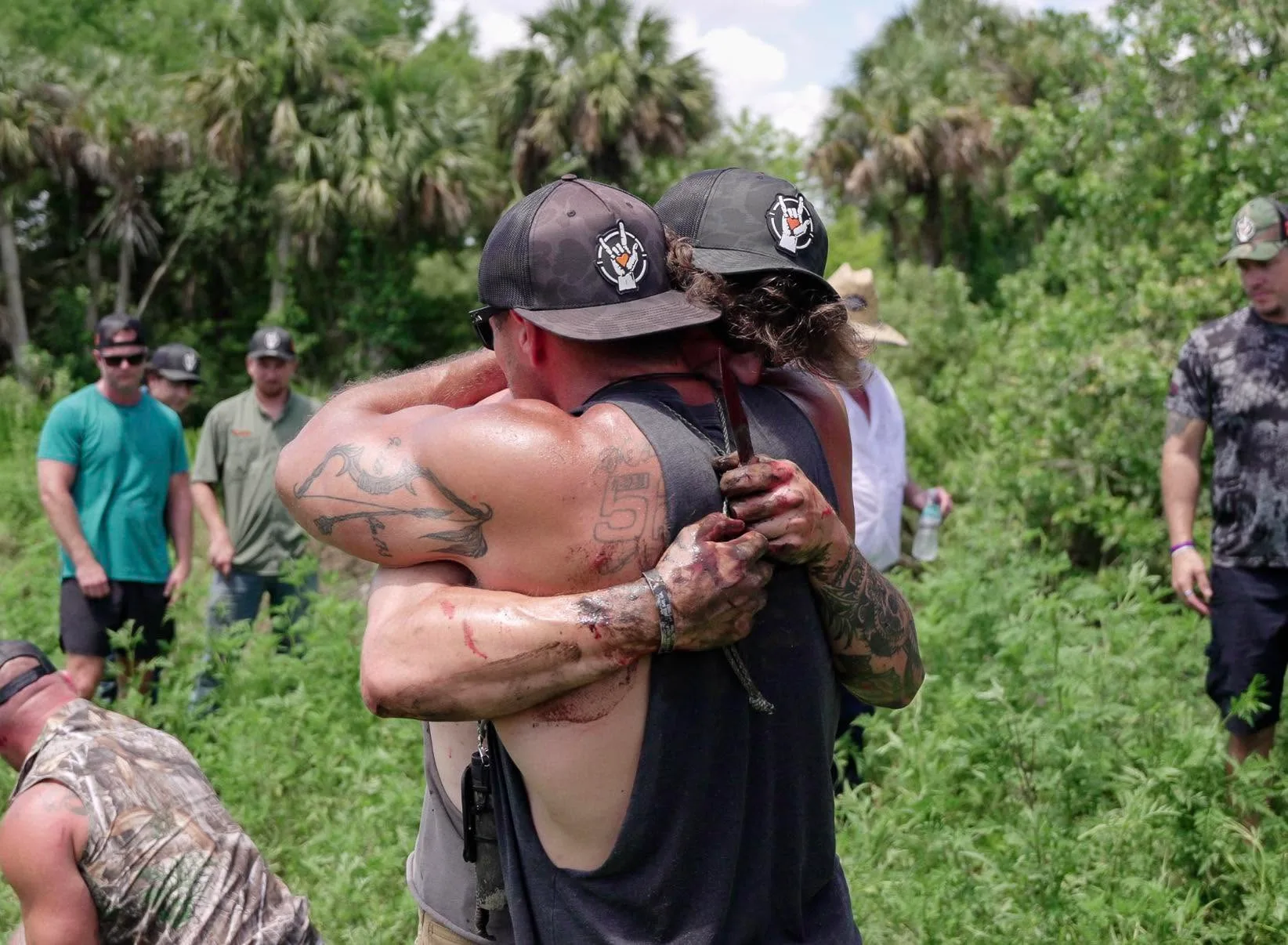
On a ranch in Elkton, Project Savior Outdoors offers an experience that looks very different from a conventional support group. A veteran might arrive for an alligator hunt, a fishing excursion or another outdoor adventure. What awaits is an opportunity to disconnect from everyday pressures and spend time with men who understand the importance of camaraderie, accountability and shared experiences. The first evening may begin around a bonfire, where participants are encouraged to talk openly about their lives. For some, Tavarez says, it may be the first truly honest conversation they have had in years. There is no expectation that a man arrive with his life in order. There is no requirement to pretend that everything is fine. The men around the fire are there to listen, encourage and walk alongside one another. The following morning might bring an entirely different kind of challenge: tracking and capturing an alligator.
It is difficult, physical and demanding. Participants must trust one another, follow instructions and work together toward a common goal. The experience creates a bond that ordinary conversation alone might never accomplish. And that is precisely the point. "You do a difficult dangerous thing with brothers and you build trust," Tavarez explains. Once that trust exists, he says, men become more willing to have the conversations that truly matter.
The Real Mission Behind the Adventure
For an outsider looking in, Project Savior Outdoors might appear to be an organization that helps struggling veterans rediscover their strength through the outdoors. And while the hunting trips, physical challenges and camaraderie certainly play a role, Tavarez wants people to understand something much more fundamental. The outdoors may bring the men together, but Jesus Christ is the reason they are there. "We do all sorts of cool stuff, man," Tavarez says, describing the hunts, alligator encounters, fitness programs and shooting experiences that have become synonymous with Project Savior Outdoors. "But it's all aimed at one thing."
That one thing is helping men understand why they exist, where their worth comes from and what God has created them to do. For Tavarez, those questions cannot be answered through a successful career, a strong physique, an extraordinary adventure or even the fellowship of other men. He believes their ultimate answer is found through a relationship with Jesus Christ. It's a conviction that shapes every conversation, every gathering and every decision the organization makes. "We interrupt it with two things," Tavarez says of the suicidal thoughts and isolation that can consume struggling veterans. "The gospel of Jesus Christ and the outdoors."
The activities create opportunities for connection. The brotherhood establishes trust. But the gospel is the message the organization ultimately hopes every participant will receive. And Tavarez is careful to explain that this is about much more than simply attending church, studying Scripture or identifying as a Christian. It is about developing a personal, daily relationship with Jesus Christ—one that transforms how a man sees himself, his family, his struggles and his purpose.
"The walk with Christ is not a checklist," Tavarez explains. "It's a relationship." Tavarez believes many veterans struggle because their identities have become so deeply connected to their military service that, when their careers end, they are left questioning their value. Project Savior Outdoors challenges that understanding of identity with a profoundly different message: a person's worth is not earned through performance, achievement or recognition, but is already established through Christ. To Tavarez, a man's worth was established long before he ever put on a uniform, earned a promotion, completed a mission or achieved anything by society's standards. And that worth does not disappear when his service ends.
It's a message Tavarez knows may be unfamiliar or even uncomfortable for some. But he makes no apologies for the organization's Christian foundation because he believes it is the very thing that makes lasting transformation possible. He also refuses to take credit for the changes he has witnessed. When men begin rebuilding relationships with their wives and children, finding freedom from the identities that once confined them, or discovering a renewed sense of purpose, Tavarez doesn't attribute those changes to himself, Mike Dragich or the adventures the organization provides. He credits God. The organization's goal, he explains, isn't to give men a purpose. It is to help them recognize the purpose they believe God has already given them. And once a man begins to understand that purpose, Tavarez hopes the transformation reaches far beyond the individual –Into his marriage, into his relationship with his children and into his friendships, workplace and community.
Unlike programs that conclude after a designated retreat or series of sessions, Project Savior Outdoors has no formal graduation. Discipleship, friendship and spiritual growth are intended to continue for a lifetime. "There's no checkout date. There's no grad date. There's no certificate at the end of this program," Tavarez says. Instead, the commitment is to continue doing life together.
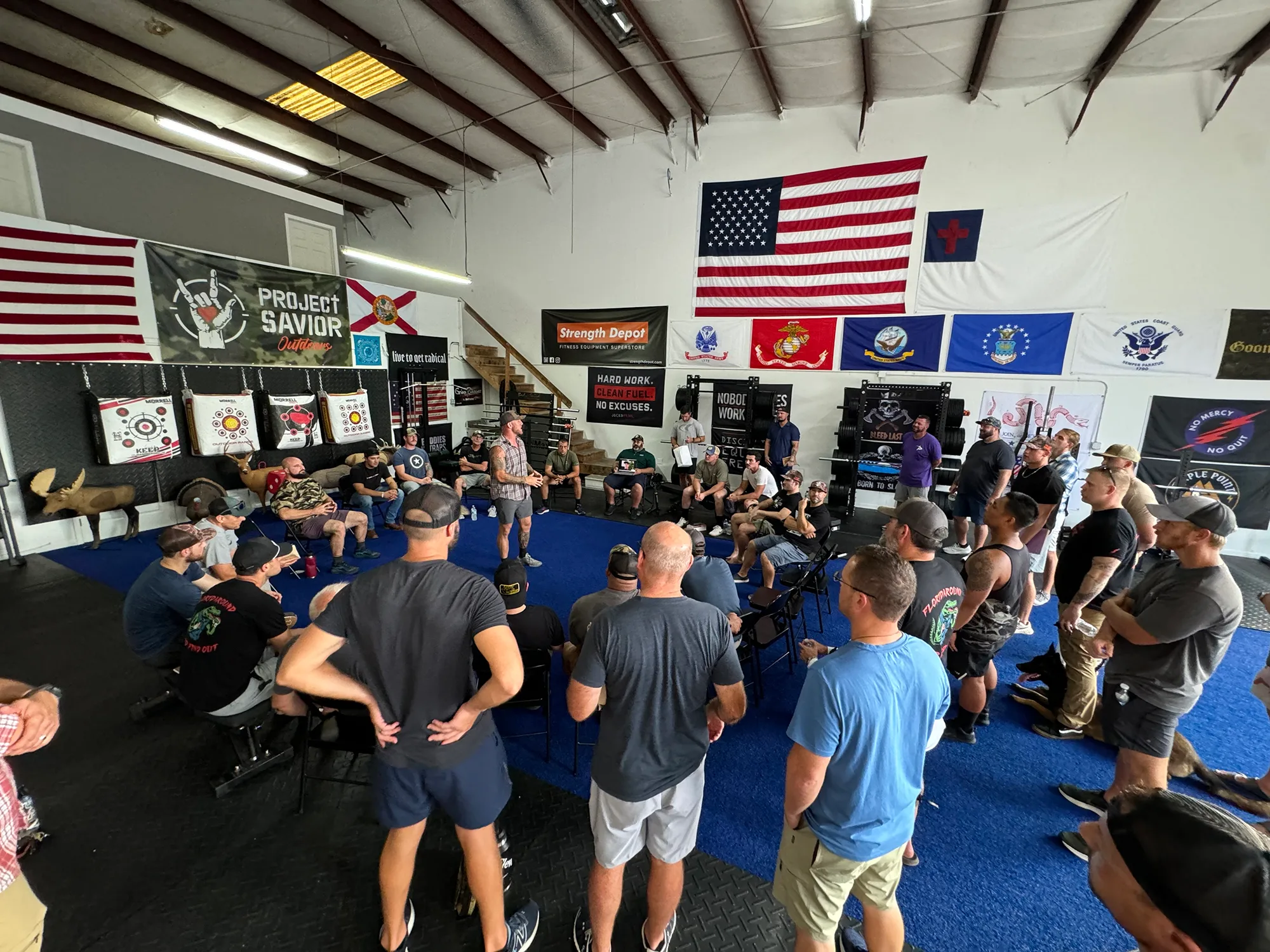
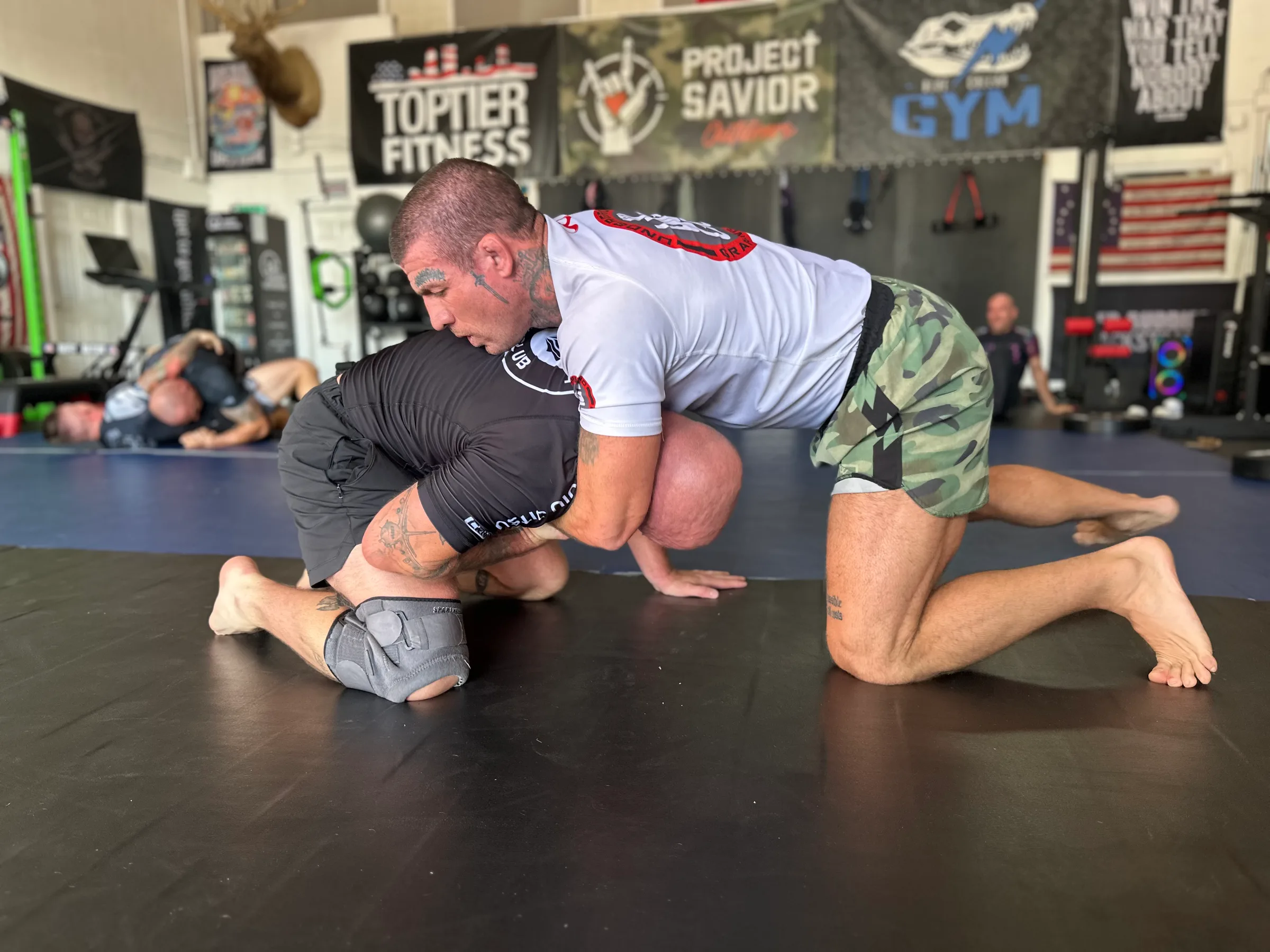
Rick Hall, one of the nonprofit's original founders, leads a structured fitness program five mornings a week, beginning at 5:30 a.m. The early workouts provide another opportunity for discipline, accountability and camaraderie. Every Wednesday, men gather at the Project Savior Outdoors warehouse along U.S. 1, south of Nocatee, for workouts, fellowship and small-group discussions. The evening begins with open gym and jiu-jitsu training, and then small group discussions, generally consisting of fewer than 10 men.
Those small groups, Tavares believes, are where some of the organization's most meaningful work takes place. Men discuss their struggles, encourage one another and examine their experiences through the teachings of Scripture. The goal is not simply to share difficult stories, but to build relationships grounded in honesty, accountability and faith.
Once a month, on the first Wednesday, the organization hosts a larger Community Night. These gatherings typically attract approximately 150 men and include a shared meal, fellowship and guest speakers. Past speakers have included professional athletes, pastors and military veterans whose experiences provide opportunities for encouragement and reflection.
A Different Kind of Strength
Spend a few minutes listening to Tavarez discuss Project Savior Outdoors, and one thing becomes clear: he has a strong opinion about what it means to be a man. But it may not be the definition people expect from a group whose activities include alligator wrestling, firearms training, martial arts and hunting. To Tavarez, masculinity is not defined by physical appearance, toughness or bravado. "What it is is being tough for and tender to your people," he says.
It is a philosophy that emphasizes responsibility, humility, service and a willingness to lead with love. He believes men have an obligation to care for their families, support their communities and accept responsibility for the people who depend on them. Strength, in his view, is not merely the ability to endure hardship. It is also the willingness to be vulnerable, ask for help and remain present for others. And he believes Jesus Christ provides the ultimate example of that balance between courage, conviction, humility and compassion.
That message carries particular significance for men who have spent years in professions where emotional restraint, self-reliance and physical resilience are often prized. For a veteran accustomed to being the person others depend upon, admitting that he is struggling can feel like surrender. Project Savior Outdoors aims to challenge that perception.
The men who participate are encouraged to recognize that vulnerability and strength are not opposites. A difficult conversation around a bonfire can require as much courage as the physical challenges they undertake together. And the measure of a man's worth, Tavarez insists, has nothing to do with how much he can lift, how many missions he completed or how successfully he navigates civilian life. It is about who he is when the uniform comes off—and, in the ministry's understanding, who God created him to be.
Turning a Viral Platform Into a Greater Purpose
For all the meaningful conversations taking place inside the ministry, Project Savior Outdoors also benefits from an unusually recognizable public figure. Dragich's alligator-wrangling videos have attracted widespread attention, introducing audiences across the country to the Marine veteran whose personality is every bit as bold as his adventures. His online identity, Blue Collar Brawler, reflects his unusual combination of interests: mixed martial arts, alligator trapping, outdoor pursuits and Christian faith. His personal story is equally unconventional. Before joining the Marines, Dragich survived being shot as a teenager, an experience he has publicly described as an important turning point in his life. His military service and subsequent faith journey helped shape the man he would become.
Today, Dragich uses the attention generated by his alligator encounters as an opportunity to share a message that matters far more to him than internet fame. In interviews, he has spoken about using his platform to introduce people to Project Savior Outdoors, encourage veterans and share his Christian faith. The alligators may be what initially capture someone's attention, but the organization hopes its mission is what they remember.
For Tavarez, Dragich's public personality is not an act. "What you see is what you get," he says. He describes Dragich as a man whose faith influences his decisions even when circumstances are difficult or the next step is uncertain. Their friendship has become an important part of the ministry's leadership, with both men committed to reaching veterans who might otherwise never seek help. And the unlikely combination of viral videos and deeply personal ministry has opened doors that a traditional nonprofit might never have encountered.
A Mission Growing Beyond St. Johns County
Tavarez says Project Savior Outdoors is developing a model that can be established in communities throughout the United States, particularly through partnerships with local churches and men willing to lead. The idea is not to require every veteran in need to travel to Northeast Florida. It is to bring the ministry to them. Whether in Arkansas, South Dakota, Washington or California, Tavarez envisions communities where veterans and first responders can find the same combination of outdoor experiences, meaningful friendships and faith-centered support that has developed in St. Johns County.
While donations support its outdoor programs, retreats, Bible studies, counseling resources and other opportunities for veterans and first responders to connect, Tavarez is quick to explain that financial contributions are only one part of what the organization needs. He describes its greatest needs in three parts: people willing to pray, people willing to give and people willing to go. For churches, that might mean establishing a new chapter. For businesses, it could mean becoming a financial or program partner. For individuals, it might mean volunteering, introducing a struggling veteran to the organization or simply extending an invitation to someone who needs community. But for Tavarez, there is a common thread connecting each of those opportunities: a willingness to answer what he believes is God's call to serve. The ultimate goal is not simply to create more outdoor programs. It is to build a network of Christian communities willing to reach veterans and first responders with the gospel, walk beside them through difficult seasons and remind them that their lives have meaning beyond their service.
The Mission Continues
Every November, Americans pause to honor veterans for their courage, commitment and willingness to serve. But for the men behind Project Savior Outdoors, honoring veterans means more than thanking them for what they have already done. It means remembering that their lives, their families and their futures matter just as much after their service ends. It means recognizing that the strongest person in the room may also be the one quietly struggling. It means understanding that a career can end without a person's purpose ending alongside it. And sometimes, it means inviting a man to sit around a bonfire, share a meal, cast a fishing line or take on an extraordinary outdoor challenge simply to remind him that he is not alone.
For Dragich, the mission that began with a desperate late-night phone call continues through every veteran who walks through the organization's doors. For Tavarez, it continues through every conversation, every small group and every man who finds the courage to speak honestly about his struggles. But neither man believes that he is the one changing lives. The alligator hunts may capture the attention. The bonfires may open the conversation. The brotherhood may give a struggling veteran the courage to return the following week. But for the men leading Project Savior Outdoors, those experiences serve a much greater purpose: introducing people to Jesus Christ and helping them build a relationship with Him that extends into every part of their lives.
It's a mission they believe is worth pursuing for as long as it takes. And from a small garage in Northeast Florida to the communities they hope to reach across America, the message remains the same: Forge community. Ignite purpose. Defy darkness. And above all, point people to Jesus Christ.
Veterans and first responders can apply or be nominated for an outdoor experience through the organization's website. Community members can also volunteer, become financial supporters or inquire about partnerships.
Anyone experiencing a suicidal crisis can call or text 988 for immediate support. Veterans and their loved ones can call 988 and press 1 to reach the Veterans Crisis Line.