Business
Ketterlinus Elementary Featured in PBS Documentary on America’s Reading Crisis
A national documentary hosted by bestselling author James Patterson is bringing renewed attention to one of the most urgent challenges in American education: how children learn to read, why so many ar
By Heather Vreeland
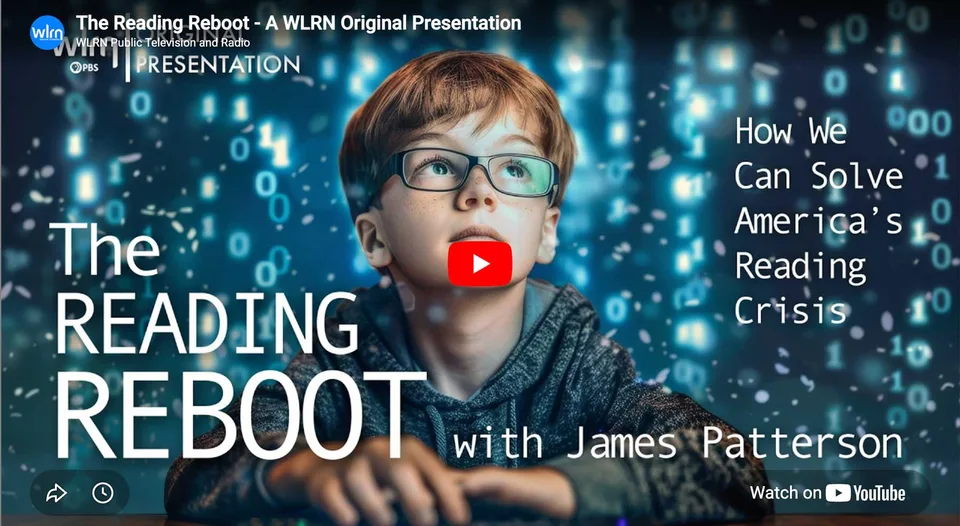
A national documentary hosted by bestselling author James Patterson is bringing renewed attention to one of the most urgent challenges in American education: how children learn to read, why so many are struggling, and what schools can do differently.
Reading Reboot: How We Can Solve America’s Reading Crisis, a WLRN documentary presented through PBS, explores the country’s literacy crisis through the lens of the Science of Reading, an evidence-based body of research focused on how children develop the skills needed to become successful readers. The nearly hour-long film examines how explicit, systematic reading instruction is changing outcomes for elementary students and highlights classrooms where those methods are already making a measurable difference.
For St. Augustine, the documentary carries a special local connection. Among the schools featured is Ketterlinus Elementary School, which served as an early pilot site for the work that helped shape UFLI Foundations, a reading program developed through the University of Florida Literacy Institute. The film identifies Ketterlinus as one of the places where research-based reading instruction moved from theory into real classrooms during one of the most difficult periods in modern education.
The documentary’s larger message is clear: America’s reading problem is not new, but the response to it is changing. For decades, educators and families have watched students move through elementary school without mastering the foundational reading skills needed for long-term academic success. Reading Reboot places that issue in a national context, showing how gaps in early literacy can affect confidence, classroom performance, and future opportunity.
Rather than focusing only on the problem, the film follows the growing shift toward the Science of Reading. This approach emphasizes the importance of teaching children how written language works, including phonemic awareness, phonics, decoding, fluency, vocabulary, and comprehension. In simple terms, it moves reading instruction away from guessing strategies and toward explicit teaching that helps students understand how sounds, letters, and words connect.
A major focus of the documentary is the work of Dr. Holly Lane and the University of Florida Literacy Institute, known as UFLI. The institute’s mission centers on improving literacy outcomes by supporting both teacher development and reader development. UFLI Foundations, the curriculum highlighted in the film, grew out of that work as educators asked for practical, classroom-ready tools to help them teach foundational reading skills more effectively.
That is where Ketterlinus Elementary enters the story. In 2020, as schools across the country were navigating the disruption of the pandemic, Ketterlinus Principal Kathy Tucker and her teachers moved forward with UFLI-based instruction. The timing could hardly have been more challenging. Classrooms were being reshaped by remote learning, health protocols, and uncertainty. Yet the need for strong reading instruction had not paused. If anything, it had become more urgent.
The documentary presents Ketterlinus as a school willing to act at a moment when many systems were still trying to find their footing. Tucker’s role was not to create the curriculum, but to recognize the need for change and help make space for it inside her school. By inviting the University of Florida Literacy Institute into the work, she helped create an early proving ground where teachers could use structured, research-based reading lessons with students who needed them.
The results drew attention. In the film, Ketterlinus is described as a Title I school, yet its early-grade reading data began rising after implementation. The documentary follows that progress as part of a broader argument: when teachers are trained in evidence-based methods and given consistent instructional tools, students can make meaningful gains.
James Patterson’s involvement gives the documentary a wider cultural platform. Known around the world for his bestselling books, Patterson has also become increasingly involved in literacy advocacy. In Reading Reboot, he uses his platform to bring attention to the stakes of early reading instruction and to the educators working to change outcomes for children.
The film also connects to the James Patterson Literacy Challenge, a partnership between the James Patterson Foundation and the University of Florida Literacy Institute designed to address literacy challenges in Florida. The initiative reflects the same premise that runs through the documentary: improving reading outcomes requires more than concern. It requires teacher training, effective materials, and a willingness to rethink approaches that have not served all students well.
<span data-mce-type="bookmark" style="display: inline-block; width: 0px; overflow: hidden; line-height: 0;" class="mce_SELRES_start"></span>
Reading Reboot: How We Can Solve America’s Reading Crisis is available free to watch on the PBS app, WLRN or directly on YouTube. The documentary offers parents, educators, and community members a deeper look at the national literacy conversation and a chance to see how a St. Augustine school became part of the effort to change the way children learn to read.