Business
Discover St. Augustine’s Local Honey Scene
National Honey Month is a chance to explore the local hives, coastal wildflowers, and St. Augustine producers behind the honey on your table.
By Caroline Triplett
Honey is one of those pantry staples that’s easy to take for granted. We squeeze it into tea, drizzle it over biscuits, and use it to sweeten everything from breakfast to dessert, but how often do we think about where it actually comes from? This September is National Honey Month, offering a reason to look a little closer at the sweet stuff, including the local beekeepers, hives, and flowers that make St. Augustine’s honey scene unique.
Before honey ever makes it into a jar, bees have already been moving from flower to flower in search of nectar. They bring that nectar back to the hive, where it’s transformed and stored as honey. What the bees find along the way can influence the color, aroma, and flavor of the finished product.
Florida’s warm climate makes it a particularly active place for beekeeping. Unlike bees in colder parts of the country, Florida honey bees can fly and queens can continue laying eggs for the majority of the year. Because of this, many commercial beekeepers in the United States move their bees to Florida during the winter to take advantage of the warmer climate. Florida is home to nearly 5,000 registered beekeepers and more than 650,000 managed colonies, according to an article by UF/IFAS.
The plants available to bees also change throughout the year. UF/IFAS identifies a range of nectar-producing plants found across Florida, including saw palmetto, blackberry, willow, goldenrod, and many citrus varieties. That changing landscape is part of what makes honey a product of its surroundings. For St. Augustine beekeepers, that can mean a jar of honey carries a little bit of the landscape wherever its hive is located.
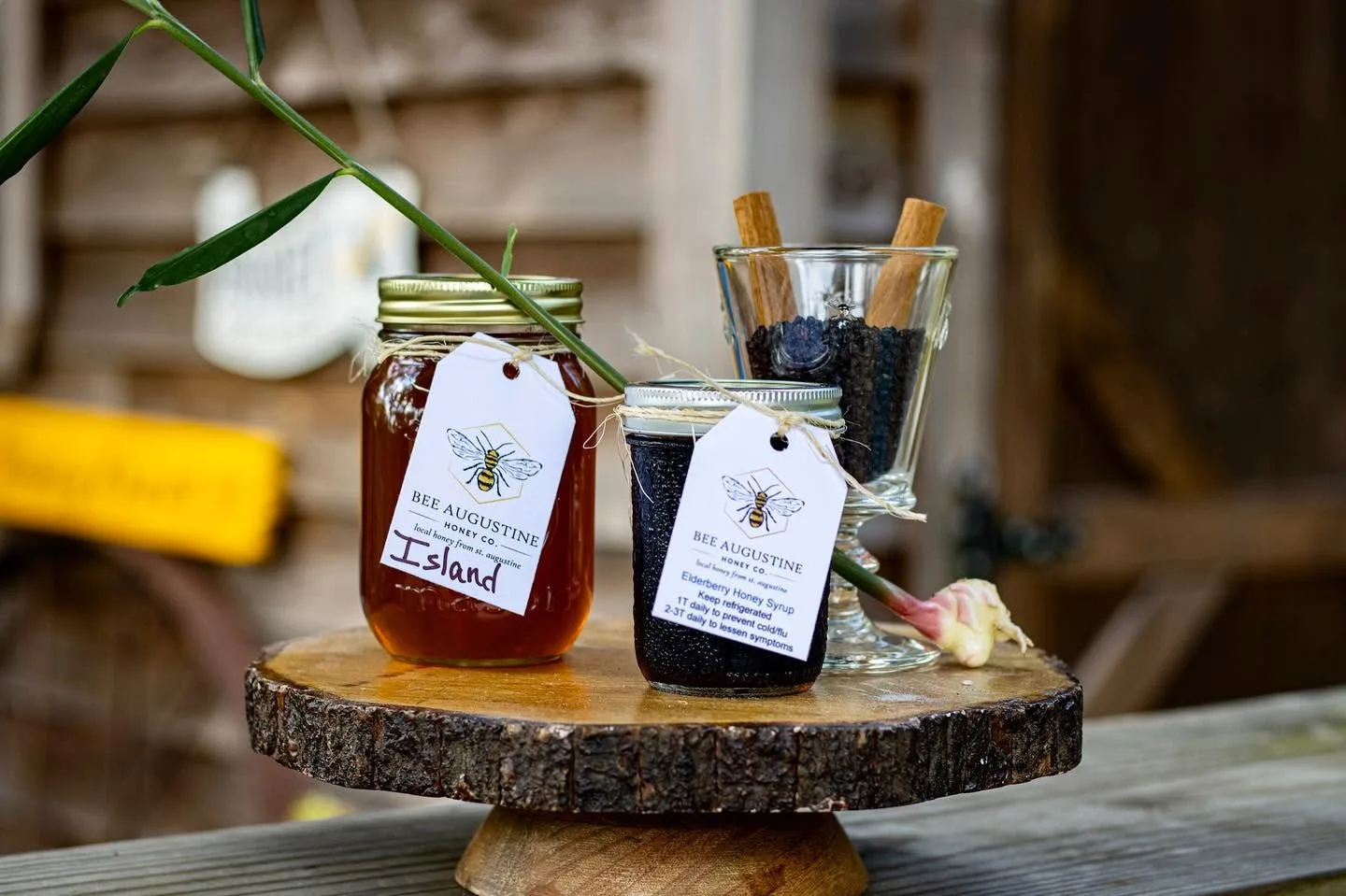
Take Bee Augustine Honey Co., which produces raw honey from nine apiaries throughout St. Augustine. The company keeps the honey from each apiary separate rather than blending its harvests together, allowing the nectar sources surrounding each hive to influence the finished product. Its apiaries stretch from St. Augustine Shores and Davis Shores to Anastasia Island, Butler Beach, and Crescent Beach.
That means the honey from one part of town can have a different character from honey produced just a few miles away. Bee Augustine describes its St. Augustine Shores honey as a smooth, balanced wildflower honey, while its Island Apiary produces a lighter, floral honey. Its Beach Apiary draws from coastal wildflowers and other vegetation growing along the shoreline. Learn more about Bee Augustine Honey Co. here.
Downtown, STUBBEES Honey + Apothecary offers an even wider introduction to the different ways honey can be enjoyed. Its selection includes raw honeycomb, bourbon-infused honey, honey habanero mustard, and whipped raw honey in a variety of flavors like cinnamon, vanilla bean, and orange zest. Visit their store on St. George street or browse their website here.
If you’ve ever wondered why one jar of honey looks pale and another is a darker amber, the answer often starts with what the bees are finding in bloom. The nectar sources available to bees can influence honey’s color, flavor, and aroma which gives different varieties their own distinct characteristics. Honey can also vary based on how it’s prepared. For example, raw honey is minimally processed, honeycomb is sold in its original beeswax comb, and creamed honey has a smooth, spreadable texture. Local producers like Bee Augustine and STUBBEES offer several of these varieties, making it easy to try all the different variations.
The next time you see a bee making its way through a St. Augustine garden, remember that its work reaches beyond the hive. Bees are important pollinators, helping flowering plants reproduce, and supporting the crops and landscapes around us.
Bee A Better Neighbor
You don’t have to keep a hive in your backyard to help St. Augustine’s bees. A few simple choices can make a difference for local pollinators. Knowing what not to do can be just as important.
Don’t panic if you see a swarm. Instead of reaching for harmful sprays, contact a professional beekeeper who can safely assess and, if needed, remove and relocate the bees.
Do give bees pollinator-friendly plants. Flowering plants provide bees with the nectar and pollen they need to forage.
Don’t use pesticides carelessly. When possible, minimize or eliminate synthetic pesticides and fertilizers in your yard, and always follow the product’s label directions.
Do support local honey. Buying honey from St. Augustine beekeepers helps to support local hives and the people who care for them.
So this National Honey Month, trade the supermarket squeeze bottle for a local jar instead. Try a new variety, support a St. Augustine beekeeper, and give the bees in your own backyard a little more room to do what they do best.