Government
Court Theophelia Project Brings New Approach to Stormwater Management
City officials and project partners gathered Sept. 18 to recognize drainage improvements designed to reduce street flooding in the Court Theophelia neighborhood.
By Paris Lugo
After a heavy rain, the success of a drainage project is measured in a simple way: less water left standing in the street. That practical goal was at the center of St. Augustine’s celebration of the completed Court Theophelia Flood Mitigation Project, marked with a ribbon cutting Sept. 18 on Bannan Avenue.
City officials, residents and project partners gathered between Court Theophelia and Court Louise streets to recognize work intended to improve how the neighborhood handles stormwater runoff. The project strengthens the existing stormwater system’s ability to move water through the area, reducing standing water in streets and providing greater protection from localized flooding.
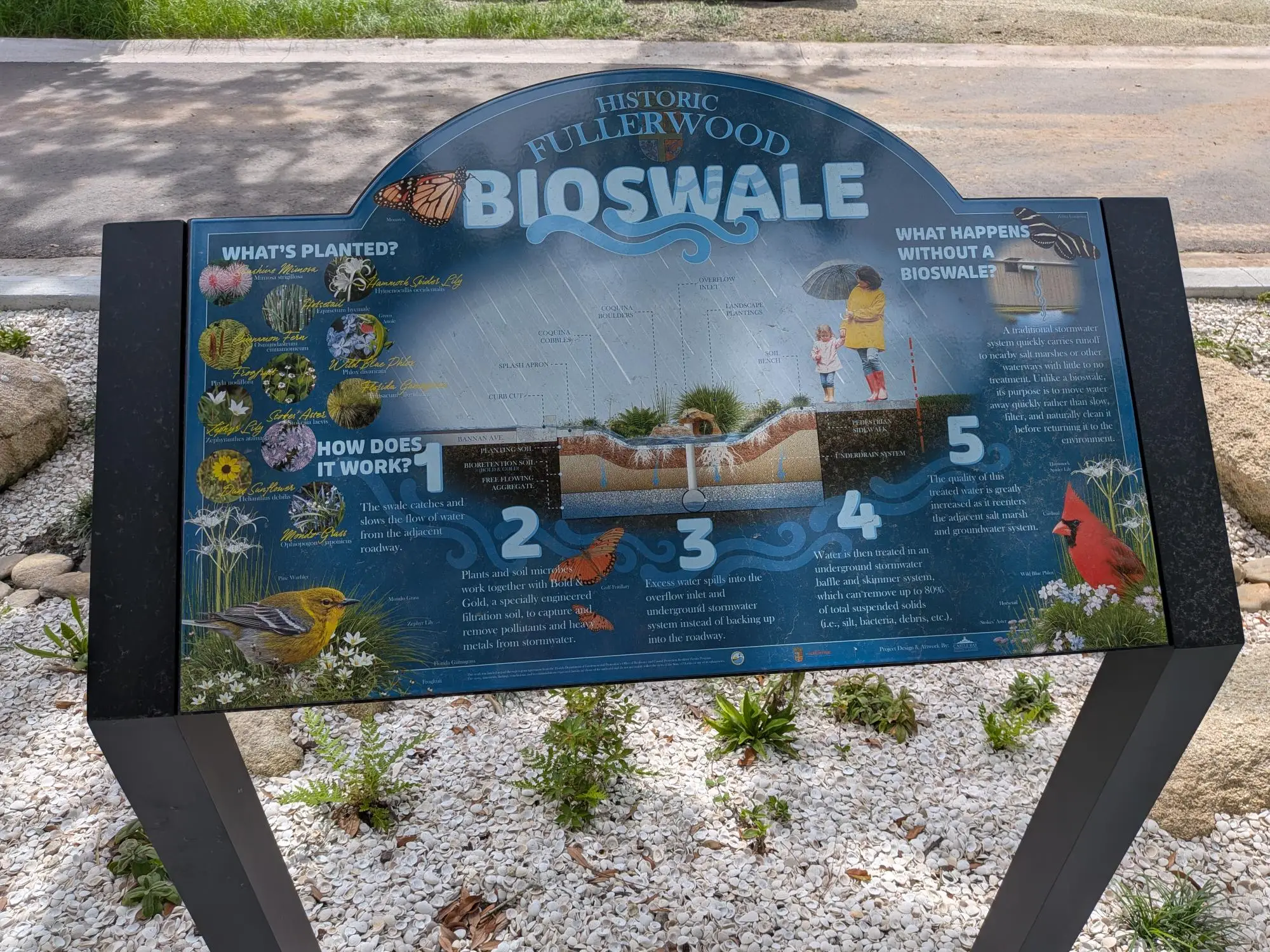
It also gave St. Augustine a visible new tool for managing water. The Court Theophelia project includes the city’s first green stormwater installation: a bioswale that captures and manages runoff through a planted landscape area while also providing water-quality benefits.
Rather than depending entirely on pipes, drains and other underground infrastructure, the bioswale works alongside those traditional systems. Stormwater is directed into the landscaped area, where the feature helps collect and manage runoff. Educational panels at the site explain the system and offer residents a closer look at the role green infrastructure can play in a city shaped by frequent rain, tidal conditions and a low-lying coastal landscape.
“To say that we are excited to see this important project completed is an understatement,” said Jessica Beach, the city’s chief resilience officer. “Even more important is to see the improvements working as they were intended for the Court Theophelia neighborhood.”
The work was funded entirely through the Florida Department of Environmental Protection’s Resilient Florida Program, which supports projects aimed at helping Florida communities prepare for flooding and other climate-related risks. For St. Augustine, the completed project represents a neighborhood-level improvement as well as a practical example of how drainage upgrades and green infrastructure can work together.
“This project is a great example of how thoughtful investment in resilient infrastructure can make a meaningful difference for our residents,” Beach said. “And we could not have done this without the patience, support and cooperation of the residents in this neighborhood.”
The project involved a number of design, engineering and construction partners. Freese and Nichols provided engineering design, permitting, modeling and utility coordination. Castle Bay Design Studio designed the bioswale and landscaping, while CDM Smith provided construction and engineering inspection services. DB Civil Construction served as the project’s construction contractor.
The ribbon cutting recognized those partners, but the project’s longer-term impact will be felt in quieter moments—when rainfall moves more effectively through the neighborhood, streets clear sooner and residents see the difference made by infrastructure designed for the realities of life in St. Augustine.