Business
Black Museum Keeps Pushing Forward, Despite Challenges
Local museum is home to 450 years of Black history in St. Augustine
By Kevin M. Briscoe
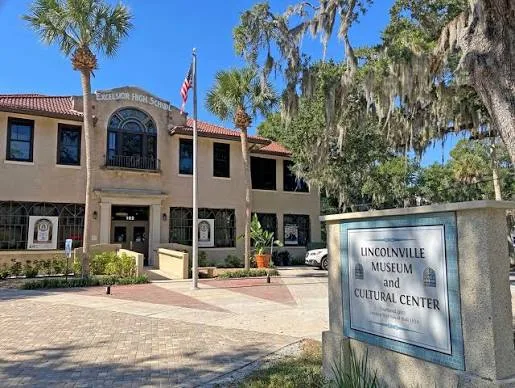
In a little more than a decade, with no prior museum management experience, Regina Gayle Phillips and her husband, Floyd, have transformed the previously underused Lincolnville Museum and Cultural Center into a thriving storehouse of more than 450 years of local Black history. Open to the public all year long except for major holidays, the museum is chock-full of artifacts and interactive exhibits that highlight the city’s important—but often tragic—role in the modern Civil Rights Movement.
The Phillips came to St. Augustine in 2015 to enjoy retirement after Floyd left a 30+ year career in the insurance industry. At the urging of museum board member Dr. Dorothy Headley Israel, Floyd accompanied her to a meeting to provide the board with business advice.
“I gave the board my best advice, and was asked to consider joining,” said Floyd. “The very next thing I began to hear was ‘you’re going to be our next president.’”
“I got involved because Floyd got involved,” said his wife, who often goes by her middle name. “I walked in that first day and was like ‘wow, this place needs help. What can I do?’”
Today, Floyd continues as board president. Gayle is the museum’s executive director.
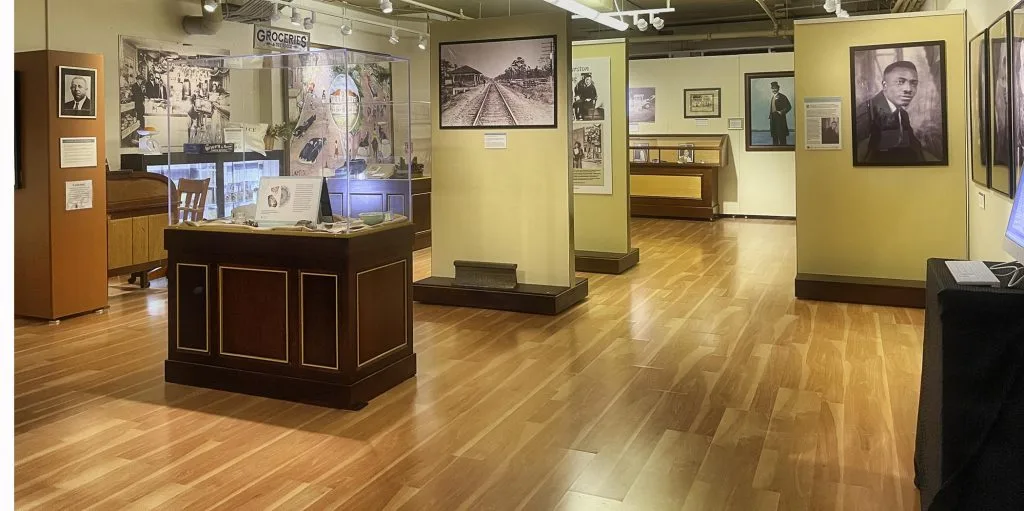
Once inside, guests are taken back in time through exhibits like a preserved section of a Woolworth lunch counter that commemorates the city’s peaceful sit-in protests in the 1960s, the original fingerprint card for Rev. Dr. Martin Luther King, Jr. from his 1964 arrest in St. Augustine, and the ever-expanding “Women Who Made a Difference” interactive kiosk highlighting local historical icons, including Dr. Israel. The museum also serves as a neighborhood hub for community meetings, theatrical plays, educational lectures, and live concerts, including the highly popular Lincolnville Jazz at the Excelsior fundraising event.
Upcoming projects include an examination of the Jim Crow-era histories of Butler Beach, the only beach previously open to Blacks in the 100-mile stretch between American Beach and Daytona Beach, and the “Whites Only” Anastasia Beach.
Operating the museum is not without its challenges. Its current budget, generated through government grants, donations and admission revenue, is not enough for long-term sustainability, forcing the Phillips to rely heavily on volunteers and interns for staffing.
“There’s an abundance of people saying, ‘why don’t you do this and why don’t you do that, and my answer is always why don’t you come help us do it,’” said Gayle. “We need to get people who are longtime residents to understand that their history is in this museum. We’ve had people here from Russia, Australia, Japan, UAE [United Arab Emirates], and we’ve had people in this neighborhood who have not been in this museum. We’re preserving the history that [we] didn’t [even] grow up in.”
The Phillips remain hopeful.
Though the proposed Florida Black History Museum, which is slated to be housed in St. Augustine, is likely years from completion, it will join the Lincolnville Museum and Cultural Center, Fort Mose Historic State Park, and the ACCORD Civil Rights Museum as another reference guide to Black history across the region.
“By us collaborating, it would enhance each museum in the city,” Floyd said. “So, I’m excited about it and welcome the opportunity for it to materialize here in this area.”